


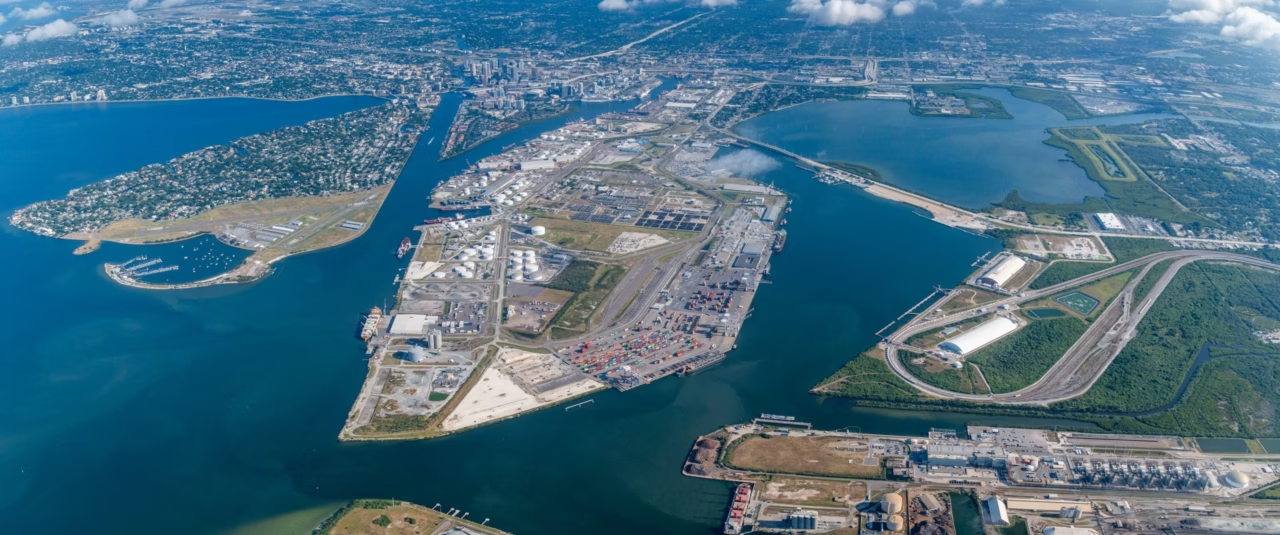
New subsurface testing will guide a proposed expansion intended to move more cargo per vessel and improve regional supply chains. Projected savings remain estimates, with design and construction milestones still ahead.
By The Sun Post News Newsroom
TAMPA, Fla. — Port Tampa Bay is advancing engineering work for a deeper shipping channel, a major infrastructure initiative that could reshape how fuel, construction materials and other goods reach West Central Florida.
The U.S. Army Corps of Engineers is drilling and collecting subsurface samples along the federal navigation channel to inform engineering and design decisions. The project would deepen the approximately 42-mile main channel from 43 feet to 47 feet.
The investigation, announced October 26, is expected to continue through the end of the year.
The additional depth could allow vessels to carry more cargo on each trip. For businesses dependent on reliable deliveries, that offers the prospect of more efficient shipping. For residents, the project’s importance lies in the supply networks supporting transportation, construction and everyday commerce.
The current announcement concerns preliminary engineering work. It does not mean the deeper channel is available for use or that major construction is complete.
Why Subsurface Testing Matters
Before engineers can finalize excavation plans, they need to understand the material beneath the waterway.
Geotechnical investigations help identify conditions that influence equipment choices, construction methods and design requirements. Those findings can also help refine cost and scheduling decisions.
The work follows several years of planning. The navigation study began under an agreement between Port Tampa Bay and the Army Corps in August 2021. The Chief of Engineers signed the study report in August 2024, followed by a Record of Decision that November. Federal water resources legislation enacted in 2024 authorized the project.
That sequence illustrates the preparation required for a harbor improvement of this scale. Commercial benefits must be examined alongside engineering feasibility, costs and environmental considerations.
A Potential Shift in Regional Freight Movement
The operational objective is to increase the amount of cargo ships can carry into the port.
According to Port Tampa Bay, a deeper channel could improve shipping efficiency for fuel, steel, automobiles, construction materials and consumer goods. Carrying more cargo per vessel could also reduce the number of arrivals needed to transport the same volume.
An Army Corps economic report cited by the port estimates potential transportation savings of approximately $90 million annually nationwide.
The report also estimates that routing cargo through Tampa rather than another Southeastern port, followed by long-distance trucking into the region, could eliminate more than 17 million truck miles each year.
These are projected benefits under the study’s assumptions. They are not savings already achieved.
The underlying logic is straightforward: cargo unloaded closer to its destination may require a shorter overland journey. Greater vessel capacity could also reduce transportation costs per unit.
However, lower logistics costs would not necessarily produce an immediate or equivalent reduction in retail prices. Contracts, competition, warehousing and distribution expenses would influence how any savings reach businesses and consumers.
Federal Funding Supports Preparatory Work
Port Tampa Bay announced $10 million in federal funding for the project in April 2026.
The announcement included $3 million secured through fiscal year 2026 community project funding requests and another $7 million in general-use funding through the Army Corps. The resources support progress on planning, engineering and design.
That initial investment should not be confused with the full cost of construction.
Planning documents distinguish preparatory work from later execution. Authorization and early funding allow the project to advance, but they do not establish that every construction phase is funded or contracted.
For taxpayers, the distinction provides a clearer basis for tracking what has been approved, what money is available and what commitments remain outstanding.
Environmental Restoration Is Part of the Proposal
The port says material removed during dredging could support coastal restoration and habitat projects.
Potential uses include helping restore and stabilize Egmont Key and undertaking habitat work near the Sunshine Skyway Bridge.
The proposal also incorporates a “channel-within-a-channel” approach, deepening the center of the existing waterway while seeking to limit expansion of its overall footprint.
Those measures present opportunities, but their environmental value will depend on final designs, regulatory requirements and implementation.
Reusing dredged material requires suitable material and appropriate placement locations. Announcing a beneficial use does not, by itself, demonstrate the eventual ecological outcome.

Permit Coordination Retains Independent Review
Earlier this month, Port Tampa Bay and the Army Corps’ Jacksonville District announced an agreement intended to improve coordination of the port’s permit applications.
The arrangement allows the port to fund a portion of a regulatory project manager’s time devoted to reviewing its workload.
According to the official announcement, the funding does not determine permit decisions or change environmental standards. The Army Corps retains authority to approve, deny or require modifications to applications.
The agreement covers multiple port needs and should not be interpreted as blanket approval for the channel-deepening project.
Its purpose is to improve communication and predictability while retaining independent environmental and public-interest review.
What Comes Next
For importers, distributors and manufacturers, the project could expand shipping options and improve access to regional markets.
For residents, its significance will depend on whether those improvements produce a more efficient supply chain without imposing unacceptable financial or environmental costs.
It is too early to promise specific consumer savings, a guaranteed number of jobs or a definitive schedule for realizing the projected benefits.
The next milestones include completing subsurface investigations, advancing design, securing applicable approvals and establishing the contracts and funding needed for construction.
Tampa’s proposed transformation will largely take place beneath the water. Its progress should remain visible through clear reporting on costs, construction decisions, environmental commitments and measurable results.